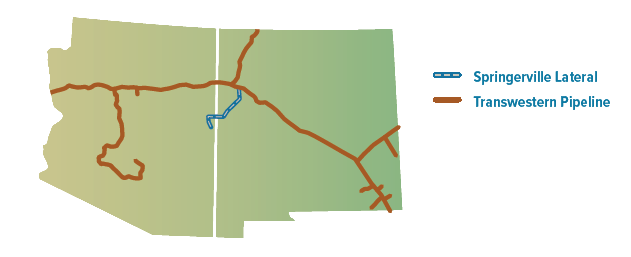
The Springerville Lateral is a proposed underground natural gas pipeline to connect Energy Transfer’s existing Transwestern Pipeline to two regional power generating stations in Apache County, Arizona. The connection will facilitate the delivery of natural gas to the Coronado and Springerville power generation facilities to replace coal as a power source.
This project will enable these facilities to transition from using coal to natural gas, helping meet growing energy demand with a more affordable, reliable, and cleaner energy source. The project represents an important step toward a more sustainable and resilient energy future by supporting around-the-clock electricity while significantly reducing emissions.
Coronado Generating Station – owned by Salt River Project
Springerville Generating Station – Units 1 and 2 owned by Tucson Electric Power; Unit 4 owned by Salt River Project
Route
Transwestern’s Springerville Lateral will originate in McKinley County, New Mexico, and extend west approximately 125 miles into Apache County, Arizona, to serve regional generating stations. The 30-inch underground pipeline will be supported by one compressor station located in Cibola County, New Mexico.
The pipeline will initially provide 625 million cubic feet per day (MMcf/d) of natural gas capacity to facilitate the conversion from coal to natural gas:
- 210 MMcf/d to the Coronado Generating Station
- 415 MMcf/d to the Springerville Generating Station
Pipeline Safety
Our top priority is to provide the safe and reliable transportation of natural gas.
Field Surveys
Construction
Quality Assurance
Safety Measures
Aerial Surveying
Project Benefits
Emissions Reduction
Economic Impact
Community Development
Reliability
Timeline
The Springerville Lateral project is expected to begin construction in January 2029, with an anticipated in-service date of November 2029.
Pre-Construction Design
CompletedOpen Season
CompletedLand Acquisitions
Next-StepsFERC Pre-Filing
Next-StepsOpen Houses
Next-StepsFERC Scoping Meetings
Next-StepsSurvey
Next-StepsDetailed Design
Next-StepsLand Acquisitions
Next-StepsFERC Filing
Next-StepsPermitting
Next-StepsDraft EIS Issued
Next-StepsFinal EIS Issued
Next-StepsRegulatory Approval
Next-StepsUnder Construction
Next-StepsIn-Service
Next-StepsRegulatory Approval
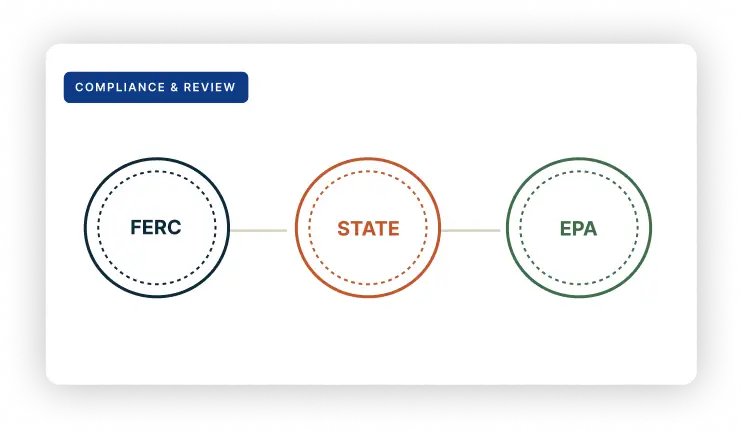
We will file for the applicable regulatory review and permits for the project with the Federal Energy Regulatory Commission (FERC), the Army Corps of Engineers, the U.S. Fish and Wildlife Service and the U.S. Forest Service as part of the 7(c) process, along with numerous county and state entities, including the State Historic Preservation Office (SHPO) and the Tribal Historic Preservation Office